
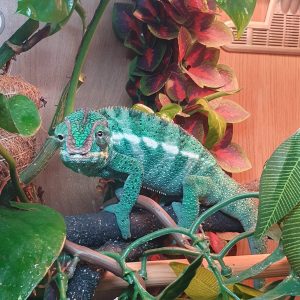



A huge part of being an animal ranger is teaching and educating both children and adults about the animals we work with. It’s also about helping people learn how to care for their own pets correctly. Many people share information they’ve heard or believed for years, but quite often these are misconceptions. We are in a fantastic position to gently debunk myths, explain up-to-date animal care advice, and encourage better understanding of the animals people love.
So, I decided to look into the chameleon question in more detail and also share some other common misconceptions that people regularly mention to me.
Understanding:
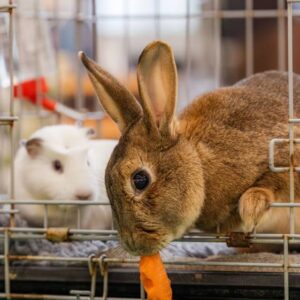
Although rabbits and guinea pigs have historically been housed together, they should not be kept together in reality.
Rabbits are generally much larger and stronger than guinea pigs and can accidentally inflict severe injuries through biting or powerful kicks. Rabbits also naturally carry a bacterium called Bordetella bronchiseptica within their respiratory system. While harmless to rabbits, it can be fatal to guinea pigs.
In addition, rabbits and guinea pigs have very different nutritional needs. When sharing an enclosure, it can be difficult to ensure both species receive the correct diet, and rabbits will often bully guinea pigs away from food.
Both animals are social species, which can make co-housing seem like a good idea. However, they cannot form proper social relationships with one another because they communicate differently and have very different behavioural needs. In simple terms — they do not “speak the same language.”

Understanding:
Your hamster may seem grumpy when handled, but this is usually because hamsters are naturally nocturnal animals.
Most of the time, when people wake hamsters during the day to handle them, they are disturbing their sleep. Hamsters naturally spend much of the day sleeping and become active during the evening and night.
Although hamsters are often considered good “starter pets,” they actually have more complex care requirements than many people realise. Owners should either provide lighting setups that allow observation of natural behaviours during the evening or simply wait until the hamster naturally wakes up.
Hamsters can also become defensive if suddenly woken and may bite. They are highly territorial animals and generally cannot be housed with other hamsters safely.
So, hamsters are not naturally moody or aggressive — they are simply behaving like nocturnal animals.
Understanding:
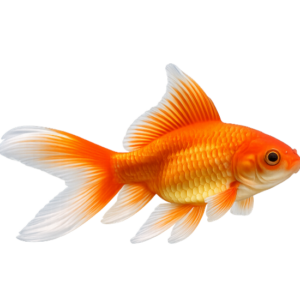
Goldfish are far more intelligent than they are often given credit for.
Studies have shown that goldfish can be classically conditioned to recognise sounds, lights, or feeding routines. They can learn these associations within one or two weeks and still remember them several months later.
Goldfish can also recognise their owners and may show excitement when familiar people approach their tank. They are capable of navigating mazes and remembering those pathways weeks later.
Never underestimate your goldfish!

Understanding:
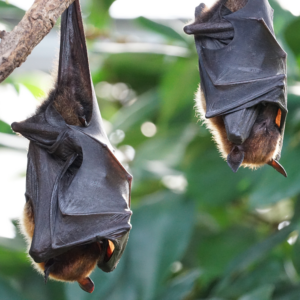
Most bats actually have very good eyesight.
They use their vision for long-distance navigation and can see extremely well in low-light conditions such as dusk and dawn. Echolocation is mainly used when flying in complete darkness.
Some species, such as the Egyptian fruit bat, have eyesight comparable to humans. Others, including flying foxes, rely almost entirely on vision and smell to locate food.
If you look up at the sky around dusk, you may spot bats flying overhead — and they will almost certainly see you too!

Understanding:
Dogs do not see the world purely in black and white.
Although their colour vision is more limited than ours, dogs can still see shades of blue, yellow, and grey. This is because dogs possess two types of colour-detecting cone cells in their eyes, whereas humans have three.
If you are buying toys or enrichment items for your dog, blue and yellow colours will stand out most clearly to them.
Interestingly, birds have even more advanced colour vision than humans. Many bird species possess at least four types of cone cells, allowing them to see ultraviolet light as well as the colours we can see.
Understanding:
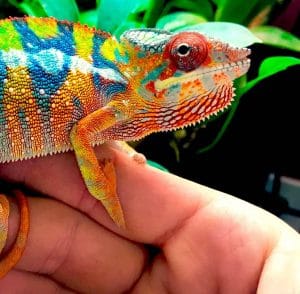
Chameleons do not primarily change colour to camouflage with their surroundings.
Instead, they change colour using specialised skin cells called iridophores, which contain tiny reflective nanocrystals. These work alongside layers of pigment-containing skin cells.
By tightening or relaxing their skin, chameleons alter the spacing between these nanocrystals. This changes the wavelengths of light reflected from their skin, allowing them to display different colours such as blues, greens, yellows, and reds.
Some colour changes can happen incredibly quickly — in as little as 20 seconds — while others may take a couple of minutes depending on the species and situation.

 |
DBS Checked • Fully Insured • Risk Assessments Available
|
DBS Checked • Fully Insured • Risk Assessments Available